How to Troubleshoot Lobster Clasps, Toggles and Open Jump Rings on Simple Jewelry
This guide helps you identify whether a closure problem comes from operation, fit or a damaged connection. It is an original planning and practice project for ordinary low-value adult decorative accessories, supported by the linked supplier or maker instructions. Keep the actual product directions beside the work, because cord, thread, beading wire and findings use different finishes. The examples are not tested load ratings or promises of permanent security. Make uncertain connections on an inexpensive sample first and stop before altering a valuable, antique or unidentified piece.
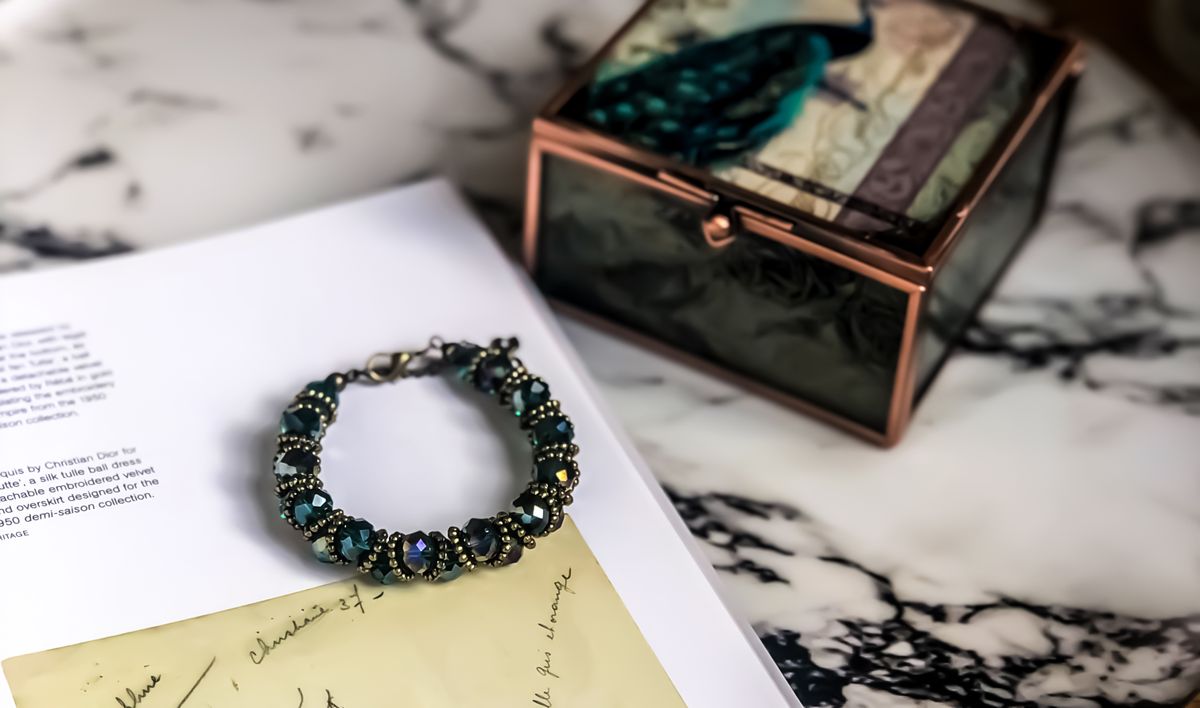
Photo: Pexels · License. Illustrative stock photography; pictured people, products and settings are not claimed to demonstrate this exact guide or endorse this publication.
Separate mechanism and connection
A clasp's spring or toggle action is one question; the rings attaching it are another. Look at the whole closure before deciding which part failed. A bracelet can open through a ring gap while the clasp works normally. Changing the mechanism alone will not solve that connection, and squeezing unrelated parts can create further damage.
Check lobster action
Operate the lever as intended and watch whether it returns fully. Do not force or bend a sticking spring mechanism. For a low-value project, replacing a damaged clasp can be more sensible than an improvised internal repair. Preserve the supplier description so the replacement's size, material and receiving-link compatibility can be checked.
Check receiving-link access
The clasp must pass over and grip the actual receiving link without awkward force. A link that is too thick, small or crowded can make a sound clasp difficult to use. Compare real parts rather than nominal dimensions. A larger receiving ring is not automatically stronger or better; it must suit the entire construction.
Assess toggle clearance
A toggle bar needs a workable path through its ring and a finished layout that allows operation. Bead bulk near the end can obstruct it. Do not make a bracelet uncomfortably tight to stop a toggle moving. Compare a temporary layout and follow the clasp maker's guidance rather than treating every bar-and-ring pair as interchangeable.
Inspect open-ring joins
Look for a visible gap, crossing ends, distortion or tool marks. Intended open rings are normally moved sideways with suitable pliers rather than pulled straight apart. A soldered ring is a different component and should not be cut as a routine beginner shortcut. Replace a damaged low-value ring instead of repeatedly bending it.
Avoid cosmetic repairs
A crimp cover or decorative bead cannot fix a malfunctioning clasp or open connection. Unknown glue is not a universal ring repair. Use the correct assembly for the selected findings and stringing system. If the construction is valuable, antique or unclear, stop and consult an appropriate professional rather than hiding the uncertainty.
Test ordinary operation
Check that the wearer can use the closure and that nearby beads remain mobile. A gentle functional review can reveal an obvious issue but does not establish a certified breaking force. Do not yank on a finished piece as an improvised proof test. If the connection is uncertain, rebuild the low-value sample with known compatible parts.
Keep a specific repair note
Record the observed failure and exact part replaced. This prevents future troubleshooting from beginning with a guess. Inspect for wear before use and follow material-specific care. A functional closure remains decorative jewelry, not a safety or retention device, and no simple visual check can guarantee that it will never open.
An illustrative project decision
A bracelet comes apart even though its lobster clasp closes normally. Inspect the receiving ring and the connections rather than replacing the clasp automatically. If a ring has an obvious gap, the mechanism was not necessarily the cause. Conversely, a sticking spring will not be repaired by tightening nearby rings. A toggle that cannot pass comfortably through its ring may need a different layout. Separate these problems so the correction addresses the actual issue rather than changing several parts without understanding what failed.
Save the choices that make the project repeatable
Record the exact materials, actual measurements, component counts and construction method that helped you identify whether a closure problem comes from operation, fit or a damaged connection. Keep the fit observation separate from a supplier's nominal size and keep spare quantities separate from the design count. If a problem appears, identify whether it concerns compatibility, order, tension, closure access or the finish before changing several parts. A small temporary sample can answer that question with less risk of losing the intended pattern. Preserve enough working length for the maker's method and do not make an irreversible cut simply to meet a self-imposed deadline. Clear records make the next version easier without claiming that every replacement component behaves identically.
Your working checklist
Checkmarks stay in this browser when storage is available. They do not submit information or complete a purchase.
Put it into practice
- Inspect the complete closure under good light before removing parts.
- Operate the clasp separately from the strand and note sticking or incomplete closure.
- Check receiving-link fit and toggle clearance with the actual components.
- Inspect each connection ring for gaps, distortion or damage.
- Replace unsuitable low-value components using the correct maker's assembly method.
- Check the complete bracelet's use and record what changed, without claiming a strength guarantee.
Before you finish
- The completed sample addresses the aim to identify whether a closure problem comes from operation, fit or a damaged connection; a temporary fitting aid is not being mistaken for a finished connection.
- Materials and finishes match the exact maker's directions; appearance alone has not been used to choose a knot, crimp or clasp.
- Actual fit and ordinary operation have been reviewed without calling the result a certified strength test or a load-bearing device.
- Relevant material labels, component counts and care information are saved for an honest gift description or a later repair.
Common questions
Can I substitute a different cord or finding?
Only after checking the actual product's compatibility and finishing instructions. A similar diameter, color or shape does not prove the same construction will work. For this task, return to “Assess toggle clearance” and make a small trial before committing the final components. Keep the substitute's material description accurate.
What if the first sample does not work?
Identify one specific problem and revisit “Avoid cosmetic repairs.” Keep the work temporary while resolving it. A small sample that reveals an unsuitable fit or finish is useful information, not a reason to hide the connection or add unknown glue. Rebuild uncertain low-value parts with known compatible components.
Is a gentle pull enough to prove the piece is secure?
No. A visual and gentle functional inspection can reveal obvious defects, but it does not establish a certified breaking strength, fixed lifespan or guarantee against opening. These are adult decorative accessories. Do not use the project as a restraint, safety line, support or device-retention system.
How should I describe or gift the finished piece?
Use the actual known materials and explain any fit uncertainty. Keep cultured and imitation pearl labels distinct, and do not call unknown metal precious or allergy-safe. Provide care based on the components rather than a universal soaking method. Valuable, antique or unidentified pieces are better assessed by a qualified professional.