How to Finish and Package a Small Beaded Gift Set with Useful Care Information
This guide helps you present coordinated adult accessories with accurate materials and practical handling information. It is an original planning and practice project for ordinary low-value adult decorative accessories, supported by the linked supplier or maker instructions. Keep the actual product directions beside the work, because cord, thread, beading wire and findings use different finishes. The examples are not tested load ratings or promises of permanent security. Make uncertain connections on an inexpensive sample first and stop before altering a valuable, antique or unidentified piece.
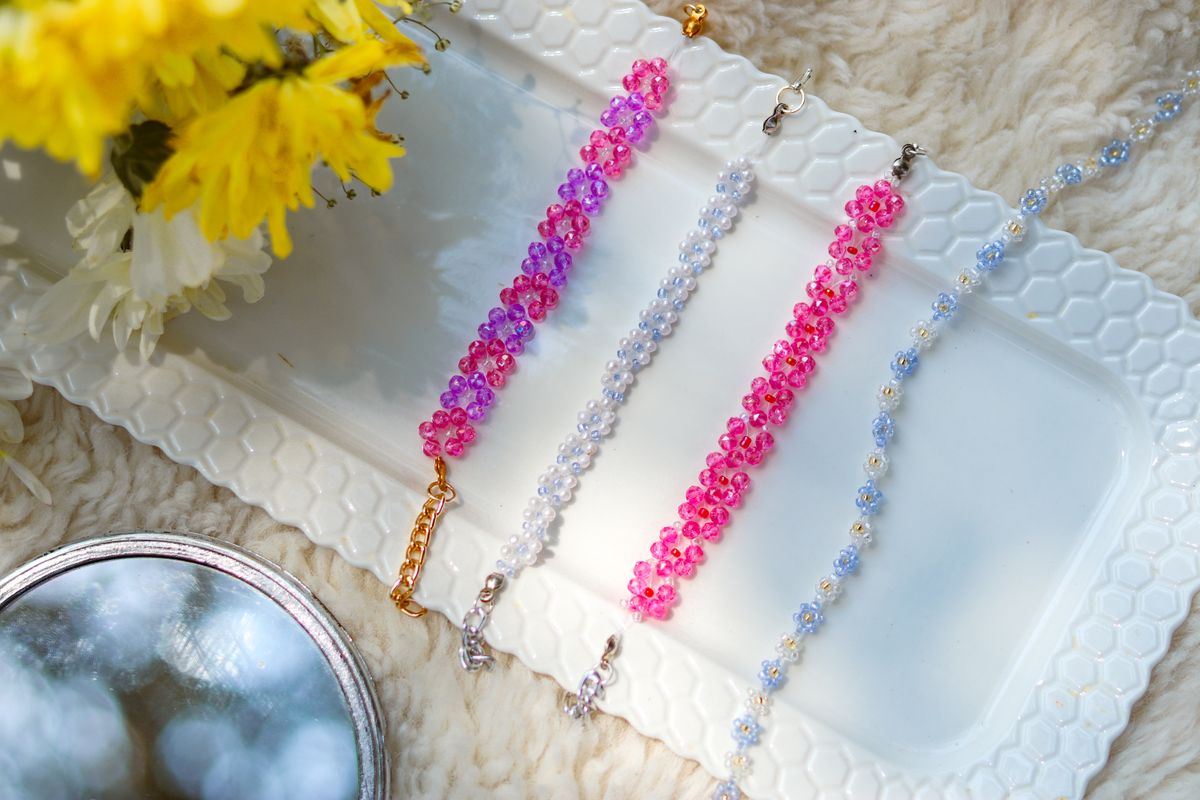
Photo: Pexels · License. Illustrative stock photography; pictured people, products and settings are not claimed to demonstrate this exact guide or endorse this publication.
Inspect before styling
Place each piece on a clean tray and review its actual construction. Look for obvious gaps, frayed material, damaged beads and a closure that does not operate as intended. A decorative package should come after those questions are resolved. A visual and gentle functional review is useful but is not a certified strength test.
Confirm fit and wording
Compare the finished size with the actual trial or recipient information. If the fit is only estimated, identify that uncertainty honestly. Check names, initials and directional beads against the confirmed brief. Do not silently substitute a spelling or claim one size fits everyone. A thoughtful gift can include a clear adjustment option.
Keep materials accurate
Use known supplier descriptions and preserve imitation, simulated or cultured qualifiers where relevant. Gold-colored does not establish gold content, and unknown alloy should not be advertised as allergy-safe. If a material is uncertain, say so. A polished handmade appearance is not evidence of precious content or a particular origin.
Separate pieces in packaging
Use suitable pouches, compartments or cards that prevent rubbing and tangling without pulling elastic or cord taut. Check that a pin or staple cannot scratch the piece or contact it unexpectedly. The package should allow the recipient to remove the accessory easily. Do not hide fragile joins beneath tight decorative ties.
Make care product-specific
Follow the bead, cord, wire and finding makers' guidance. Different coatings and stringing systems may not tolerate the same water, solvent or ultrasonic treatment. Avoid a universal cleaning recipe. Keep the care card brief and practical, and refer valuable or uncertain jewelry questions to an appropriate professional rather than making a confident home-treatment claim.
Explain decorative limits
Describe the pieces as adult decorative accessories. Do not imply that a charm can retain a phone, that a bracelet is child-safe or that a closure can never open. Small parts and ordinary wear deserve sensible handling. Remove jewelry for activities likely to catch it and inspect for new wear before reuse.
Support a future repair
Keep the final sequence, spare bead identity and exact stringing product in your own record. A small nonprivate project reference can help identify the design later. Avoid publishing unnecessary recipient information on an accessory or care card. Repair becomes simpler when the material and construction choices are known rather than guessed from a photograph.
Keep presentation restrained
A coherent color relationship and clean packaging can be enough. Extra loose decoration may create clutter or rub against the pieces. Choose the final presentation after the practical information is clear. The gift should be pleasant to open and straightforward to use, with no need to decode an elaborate package before finding the care details.
An illustrative project decision
Two bracelets look coordinated but use different stringing systems. Package them separately enough to prevent tangling and explain the actual care for each rather than giving one universal soaking instruction. Keep glass imitation pearl and unknown metal descriptions honest. If fit was estimated, say so and offer a practical adjustment plan rather than calling the gift universally adjustable. A gift feels more complete when its closures work, spelling is correct and the recipient knows how to handle it. Extra ribbon cannot compensate for an uncertain connection.
Save the choices that make the project repeatable
Record the exact materials, actual measurements, component counts and construction method that helped you present coordinated adult accessories with accurate materials and practical handling information. Keep the fit observation separate from a supplier's nominal size and keep spare quantities separate from the design count. If a problem appears, identify whether it concerns compatibility, order, tension, closure access or the finish before changing several parts. A small temporary sample can answer that question with less risk of losing the intended pattern. Preserve enough working length for the maker's method and do not make an irreversible cut simply to meet a self-imposed deadline. Clear records make the next version easier without claiming that every replacement component behaves identically.
Your working checklist
Checkmarks stay in this browser when storage is available. They do not submit information or complete a purchase.
Put it into practice
- Inspect each completed accessory and compare it with the confirmed design and fit record.
- Check closure operation, visible joins, spelling and loose small components.
- Copy accurate material descriptions from the supplier records.
- Choose packaging that prevents rubbing and tangling without stretching the pieces.
- Write care and adjustment information specific to the actual systems.
- Include a simple component record or contact note for a future repair, keeping private details off public accessories.
Before you finish
- The completed sample addresses the aim to present coordinated adult accessories with accurate materials and practical handling information; a temporary fitting aid is not being mistaken for a finished connection.
- Materials and finishes match the exact maker's directions; appearance alone has not been used to choose a knot, crimp or clasp.
- Actual fit and ordinary operation have been reviewed without calling the result a certified strength test or a load-bearing device.
- Relevant material labels, component counts and care information are saved for an honest gift description or a later repair.
Common questions
Can I substitute a different cord or finding?
Only after checking the actual product's compatibility and finishing instructions. A similar diameter, color or shape does not prove the same construction will work. For this task, return to “Separate pieces in packaging” and make a small trial before committing the final components. Keep the substitute's material description accurate.
What if the first sample does not work?
Identify one specific problem and revisit “Explain decorative limits.” Keep the work temporary while resolving it. A small sample that reveals an unsuitable fit or finish is useful information, not a reason to hide the connection or add unknown glue. Rebuild uncertain low-value parts with known compatible components.
Is a gentle pull enough to prove the piece is secure?
No. A visual and gentle functional inspection can reveal obvious defects, but it does not establish a certified breaking strength, fixed lifespan or guarantee against opening. These are adult decorative accessories. Do not use the project as a restraint, safety line, support or device-retention system.
How should I describe or gift the finished piece?
Use the actual known materials and explain any fit uncertainty. Keep cultured and imitation pearl labels distinct, and do not call unknown metal precious or allergy-safe. Provide care based on the components rather than a universal soaking method. Valuable, antique or unidentified pieces are better assessed by a qualified professional.