How to Choose and Assemble a Decorative Phone Charm
A phone charm is easy to confuse with a wrist strap designed to hold a device. This guide makes a decorative beaded accent only. It does not certify the case, attachment, cord or findings to retain a phone or prevent a drop. Begin with the case manufacturer’s supported attachment method, then decide whether a small ornament can sit there without interfering with the device.
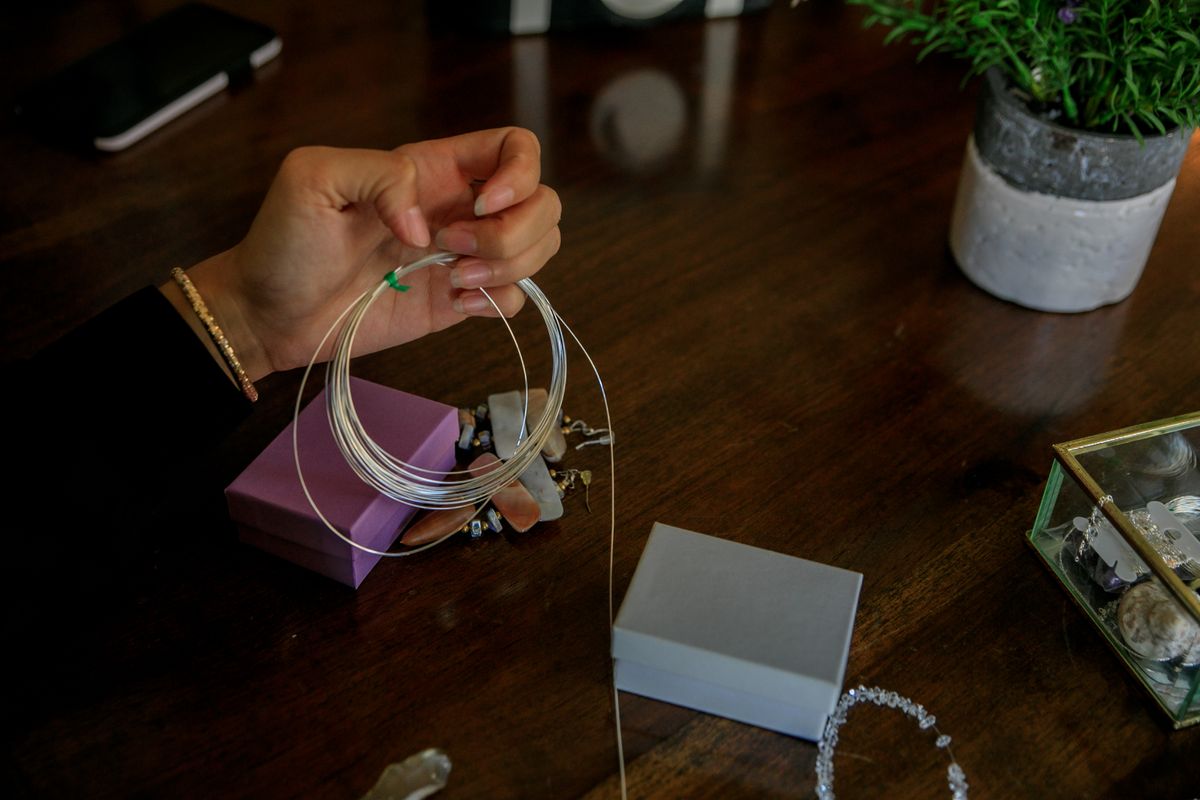
Photo: Pexels · License. Illustrative stock photography; pictured people, products and settings are not claimed to demonstrate this exact guide or endorse this publication.
Read the case attachment instructions first
Check whether the specific case has a supported charm loop, strap opening or compatible accessory system. Do not feed cord through a speaker, charging port or camera opening. A hole that looks convenient may have another purpose. If the case maker gives no suitable attachment method, do not improvise one from the device’s functional openings. Choose a decorative accessory for a different object instead. The device and case instructions set the boundary for this project.
Keep the purpose visible in the brief
Write decorative accent at the top of the project note. Do not call the finished piece drop-proof, hands-free or a safety lanyard. A loop large enough to fit a wrist can still contain an untested knot or weak connector. If device retention is required, choose a purpose-designed compatible system and follow its instructions. The bead layout here is not a replacement for that system and should not be attached in a way that alters its function.
Plan a compact layout with minimal interference
Keep the ornament short enough to stay away from the screen, lenses and controls during ordinary use. Mock up the length in paper and check the phone on a desk and in its usual storage pocket. Avoid sharp-edged or heavy focal beads that could strike the device or scratch a surface. Smooth lightweight beads are easier to inspect. A simple single dangle is a better first version than several long loops that can tangle.
Test holes and finish compatibility on the mat
Choose cord or findings that fit the decorative attachment without forcing, then test the smallest bead holes. Keep the assembly off the phone while forming wire, trimming cord or using any product-specified adhesive. A knot or crimp must match its actual material; do not transfer beading-wire hardware to an elastic system. Set aside any bead with a chipped opening or any clip with an unreliable closure before assembling the ornament.
Build a visible prototype before hiding ends
Arrange the beads in a short color sequence and leave temporary working tails. Check the ornament’s own movement and possible snag points while it remains on the mat. If the chosen method uses a fixed loop, add all required enclosed parts before closing it. Do not push a connection into a bead hole just to make it disappear. First confirm that the finish follows the component maker’s directions and remains inspectable.
Check the complete device in ordinary positions
With the phone held securely by hand over a soft surface, attach the decorative charm according to the case instructions. Do not suspend the device from it or conduct a drop test. Check charging, camera clearance, buttons and the way the phone rests on a table. Remove the charm if it changes the case fit, blocks a function or presses a hard bead against the screen. Physical compatibility matters more than the photograph of the design.
Consider snagging, privacy and surroundings
A charm may catch on a pocket or another bag item even when it clears the phone’s ports. Keep the design easy to remove and leave it off when it could interfere with an activity. Avoid adding a full name, private phone number or home address to letter beads on a publicly visible accessory. Small parts and cord loops should be kept away from children and pets, and the finished ornament should not be presented as a toy.
Retain the case information and inspect periodically
Keep the compatible case model and attachment instructions in the project note along with the bead and cord details. Check for wear at the attachment, because the case and ornament can rub against each other. Remove the piece if a component becomes loose, sharp or damaged. When giving the charm to another adult, include the decorative-use limitation and the required case compatibility. Do not imply that a neat-looking finish establishes device protection.
Your working checklist
Checkmarks stay in this browser when storage is available. They do not submit information or complete a purchase.
Put it into practice
- Identify the exact case and its supported attachment method. Reject any plan that uses a functional device opening, changes the case fit or depends on an unapproved improvised connection.
- Make a compact paper length mockup and check the intended position near the screen, camera and controls. Choose lightweight beads and write down that the ornament is decorative rather than a retaining strap.
- Assemble and inspect the bead layout entirely off the phone. Match the finish to the chosen material and keep the connection visible until it has passed the product-specific finishing checks.
- Attach the ornament only through the supported case feature while holding the phone securely. Check ordinary device functions over a soft surface without hanging the phone from the charm.
- Test storage in the usual pocket or compartment with the phone still under hand control. Remove or shorten a design that snags, strikes the screen or becomes trapped near a button.
- Save the compatibility and materials notes, inspect wear periodically and include the decorative-use limitation when gifting. Remove the ornament as soon as its attachment or components deteriorate.
Before you finish
- No port, speaker or camera opening is used as an attachment.
- The case fit and controls remain unobstructed.
- The phone was never suspended or dropped for a craft test.
- The finished item carries no device-retention guarantee.
Common questions
Can I use it as a wrist strap?
This decorative project is not rated to hold a phone. Use a purpose-designed compatible retention accessory if that is your requirement, and follow its manufacturer’s instructions without substituting this bead assembly.
Can a thin cord go through the charging opening?
Do not improvise an attachment through a functional device opening. Only use the case maker’s supported method, and remove any ornament that obstructs charging or changes how the case fits.
Should I test it by dropping the phone?
No. A craft inspection does not create a certified drop-protection test and can damage the device. Keep the phone securely supported while checking clearance and ordinary functions.
What if my case has no charm loop?
Use a manufacturer-supported compatible accessory if available, or choose another object for the ornament. Do not cut or pierce the case or use an unrelated opening to force this project to fit.