How to Make a Pearl-Look Bracelet with Honest Glass, Cultured or Simulated Labels
This guide helps you choose compatible pearl-look beads and describe their actual material clearly. It is an original planning and practice project for ordinary low-value adult decorative accessories, supported by the linked supplier or maker instructions. Keep the actual product directions beside the work, because cord, thread, beading wire and findings use different finishes. The examples are not tested load ratings or promises of permanent security. Make uncertain connections on an inexpensive sample first and stop before altering a valuable, antique or unidentified piece.
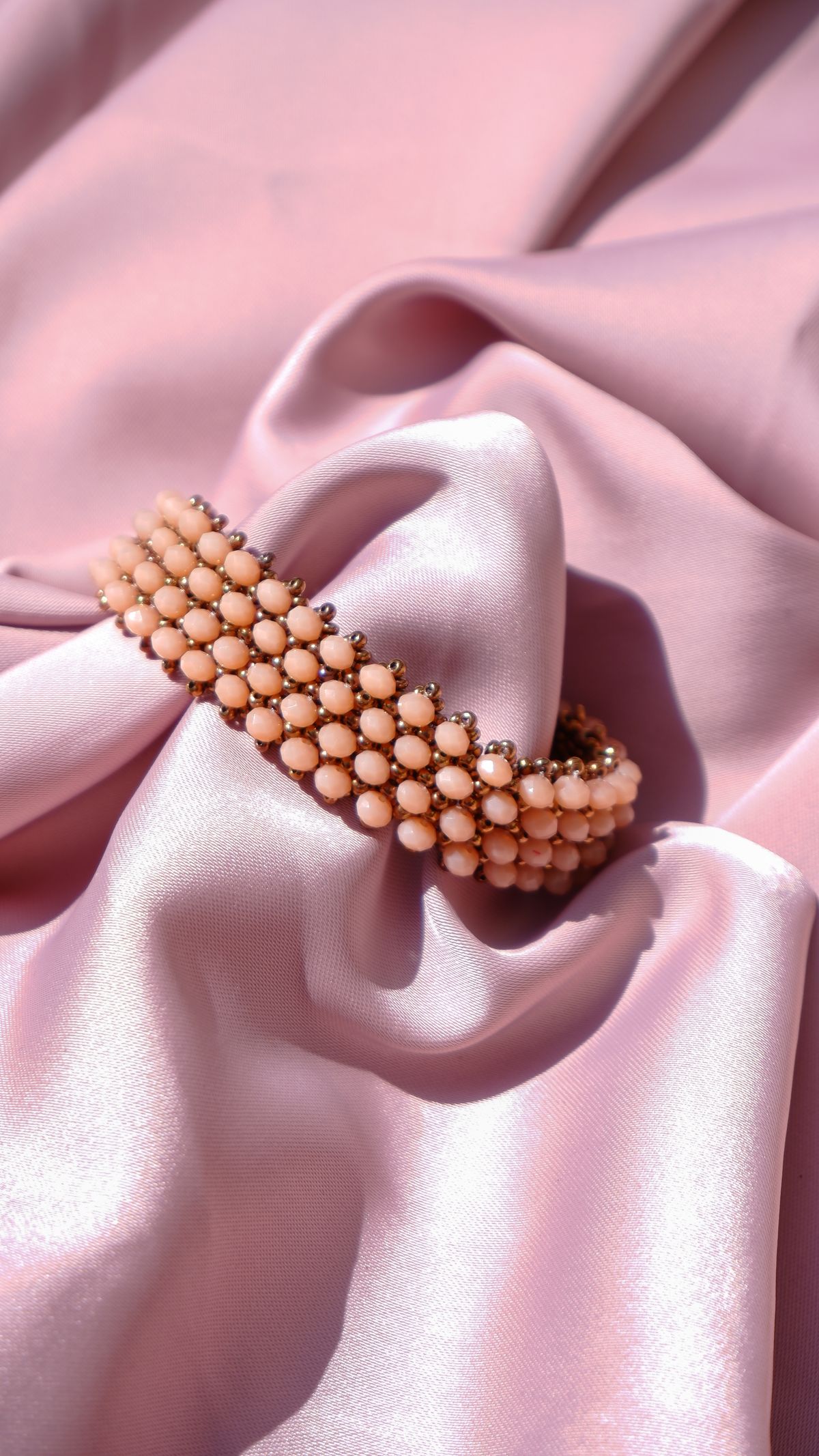
Photo: Pexels · License. Illustrative stock photography; pictured people, products and settings are not claimed to demonstrate this exact guide or endorse this publication.
Separate sheen from identity
A pearl-like bead can be manufactured from glass, plastic or other materials. Cultured pearls are a different category from imitations. FTC guidance helps explain accurate descriptions. Keep the supplier's qualifiers rather than using visual resemblance to upgrade an unknown material into a natural or cultured pearl claim.
Preserve the full description
Record glass imitation pearl, simulated material or cultured pearl as appropriate, including supplied treatment information. Freshwater alone does not replace cultured when that is the actual category. If identity is unknown, say so. Do not assign authenticity or value from a photograph, a home scratch test or the attractiveness of the finished design.
Inspect before stringing
Look for chips, rough hole edges and unsuitable coating damage. Keep rejected beads outside the design count. Do not enlarge unknown holes with improvised tools. A bead can look good on the mat and still be incompatible with a particular thread or wire. Test several small holes rather than relying on one convenient large one.
Choose the correct system
Use product directions to match holes, stringing material and finish. Thread, elastic and beading wire are not interchangeable constructions. A crimp made for wire should not be improvised onto ordinary elastic or thread. Keep the relevant packaging beside the project until the final connection has been made and inspected.
Keep the layout inspectable
A simple strand is easier to fit and review than a heavy complicated first project. Include the actual clasp and rings in the trial. Bead bulk changes interior space, so an open ruler measurement cannot alone establish comfort. Save the successful temporary arrangement before cutting or closing anything permanently.
Finish without forcing
Use the maker's knot or crimp method and preserve the needed working room. Do not pull a bulky knot into an incompatible hole or crush a delicate bead beside a finding. A hidden finish is a visual choice, not proof of a sound connection. Keep the construction inspectable while resolving uncertainty.
Label the result honestly
Keep imitation, simulated or cultured qualifiers with the relevant material description. Unknown spacers should not become sterling or allergy-safe in a gift note. Clear information allows the recipient to make their own choices. A polished appearance is not a reason to imply higher value, different origins or a material category you cannot verify.
Use material-specific care
Follow the bead and cord makers' directions rather than one universal soaking or cleaning recipe. Coatings, cultured materials and unknown metals can need different treatment. Refer valuable or antique pieces to a professional. Keep the original component record so a future repair does not replace identified material with an ambiguous look-alike.
An illustrative project decision
A packet says glass imitation pearl beads. Preserve that description on the project record and gift card rather than shortening it to natural pearls. If a different packet contains cultured freshwater pearls, keep cultured and any supplied treatment or care information. Choose stringing from actual holes and finish compatibility, not appearance alone. Unknown inherited or valuable strands belong with a qualified professional rather than a home scratch test or a beginner restringing experiment. An attractive finish does not change the material category.
Save the choices that make the project repeatable
Record the exact materials, actual measurements, component counts and construction method that helped you choose compatible pearl-look beads and describe their actual material clearly. Keep the fit observation separate from a supplier's nominal size and keep spare quantities separate from the design count. If a problem appears, identify whether it concerns compatibility, order, tension, closure access or the finish before changing several parts. A small temporary sample can answer that question with less risk of losing the intended pattern. Preserve enough working length for the maker's method and do not make an irreversible cut simply to meet a self-imposed deadline. Clear records make the next version easier without claiming that every replacement component behaves identically.
Your working checklist
Checkmarks stay in this browser when storage is available. They do not submit information or complete a purchase.
Put it into practice
- Copy the exact supplier material description and care information.
- Inspect coating and holes and test the chosen stringing system.
- Lay a simple pattern with spares separate.
- Fit a temporary strand with the actual closure where relevant.
- Finish by the exact cord or wire maker's method.
- Label the result accurately and provide component-specific care.
Before you finish
- The completed sample addresses the aim to choose compatible pearl-look beads and describe their actual material clearly; a temporary fitting aid is not being mistaken for a finished connection.
- Materials and finishes match the exact maker's directions; appearance alone has not been used to choose a knot, crimp or clasp.
- Actual fit and ordinary operation have been reviewed without calling the result a certified strength test or a load-bearing device.
- Relevant material labels, component counts and care information are saved for an honest gift description or a later repair.
Common questions
Can I substitute a different cord or finding?
Only after checking the actual product's compatibility and finishing instructions. A similar diameter, color or shape does not prove the same construction will work. For this task, return to “Choose the correct system” and make a small trial before committing the final components. Keep the substitute's material description accurate.
What if the first sample does not work?
Identify one specific problem and revisit “Finish without forcing.” Keep the work temporary while resolving it. A small sample that reveals an unsuitable fit or finish is useful information, not a reason to hide the connection or add unknown glue. Rebuild uncertain low-value parts with known compatible components.
Is a gentle pull enough to prove the piece is secure?
No. A visual and gentle functional inspection can reveal obvious defects, but it does not establish a certified breaking strength, fixed lifespan or guarantee against opening. These are adult decorative accessories. Do not use the project as a restraint, safety line, support or device-retention system.
How should I describe or gift the finished piece?
Use the actual known materials and explain any fit uncertainty. Keep cultured and imitation pearl labels distinct, and do not call unknown metal precious or allergy-safe. Provide care based on the components rather than a universal soaking method. Valuable, antique or unidentified pieces are better assessed by a qualified professional.